![🍵 琥珀 [Kohaku] – Yame Sencha with Gold Powder](https://mukohmatcha.com/wp-content/uploads/2026/01/kohaku0-346x310.jpg)
![❤️Mukoh Matcha Recommends❤️ [恋- Koi (Love) Matcha] Culinary Grade Matcha 100% Yame-Grown Dreaming Yamecha Stem Matcha Green Tea Powder For Drinking, Cooking, Seasonal Presents, Mother’s Day, Father’s Day, and Souvenirs](https://mukohmatcha.com/wp-content/uploads/2026/01/koi-2-346x310.jpg)
![Bulk & Wholesale 📦 [恋- Koi] Culinary Grade Matcha 100% Yame-Grown Dreaming Yamecha Stem Matcha Green Tea Powder For Drinking, Cooking, Baking](https://mukohmatcha.com/wp-content/uploads/2024/11/jfsm-b-items5-346x310.jpeg)
![Best Seller! 🤩 [Inaka] Culinary Confectionery grade Matcha green tea powder for latte, sweets](https://mukohmatcha.com/wp-content/uploads/2025/10/inaka2-346x310.jpg)
![Best Seller! 👍 [Inaka] Bulk & Wholesale Culinary Confectionery grade Matcha green tea powder for latte, sweets](https://mukohmatcha.com/wp-content/uploads/2024/11/bulk-346x310.jpg)
![New Item⭐️[Villan Vanilla] Black Vanilla Custard Powder – For Latte, Custard, Yogurt, and Baking](https://mukohmatcha.com/wp-content/uploads/2025/09/Villan-Vanilla-2-346x310.jpg)
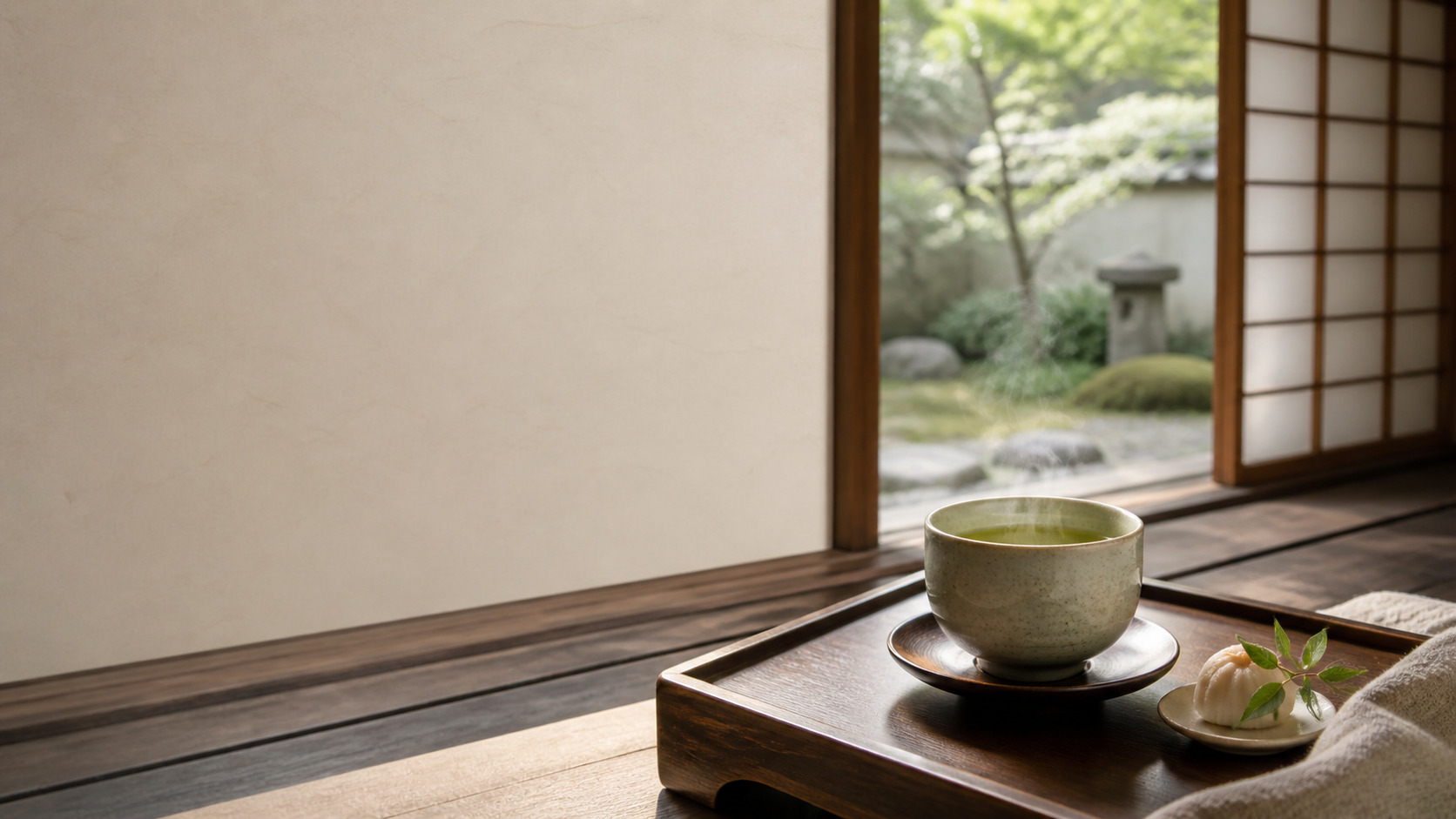
Brewing the Moment・A Life Without Hurry, Found in the Stillness of “Wa”
Your breath, here and now.
The warmth of your hands.
The scenery before your eyes.
The quiet act of brewing a cup of tea gently brings a restless heart back to reality.
Within the spiritual soil of Japan, there has long been a sensitivity to deeply savoring “this very moment.” To see the universe within a limited space. To overlap the passing of a brief season with the course of one’s life. To discover, within ordinary gestures, a beauty almost akin to prayer.
The way of tea is one of the quietest expressions of that spirit.
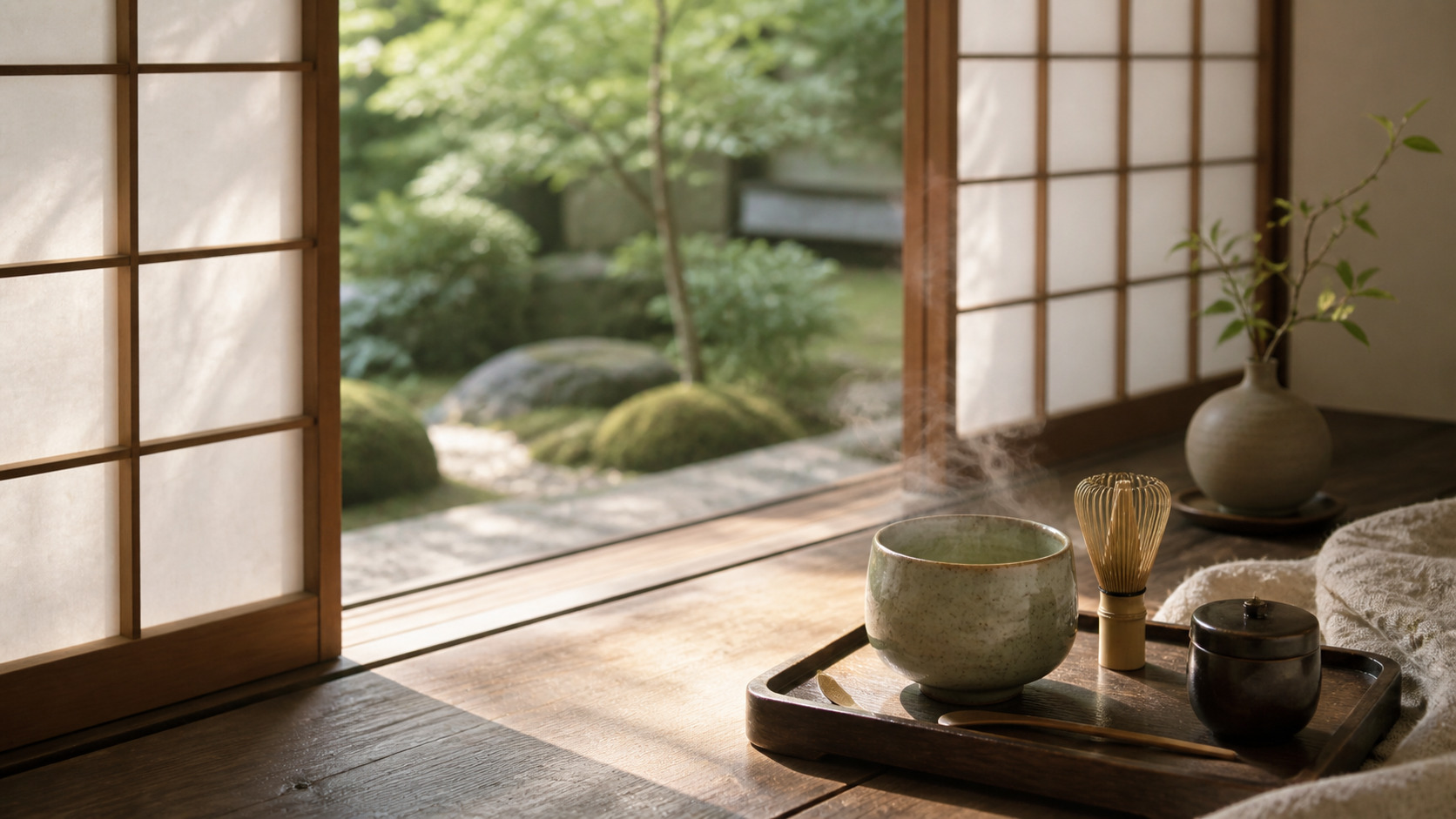
Beyond the Rising Steam, Hurry Begins to Unravel
When we are impatient, the heart is always running ahead.
What should I do next?
Will I make it in time?
Am I falling behind?
Will things really be all right like this?
Thoughts fly into the future like arrows, while the body alone is left behind in the present. Yet the time spent brewing tea invites us, just once, to lay those arrows down upon the tatami.
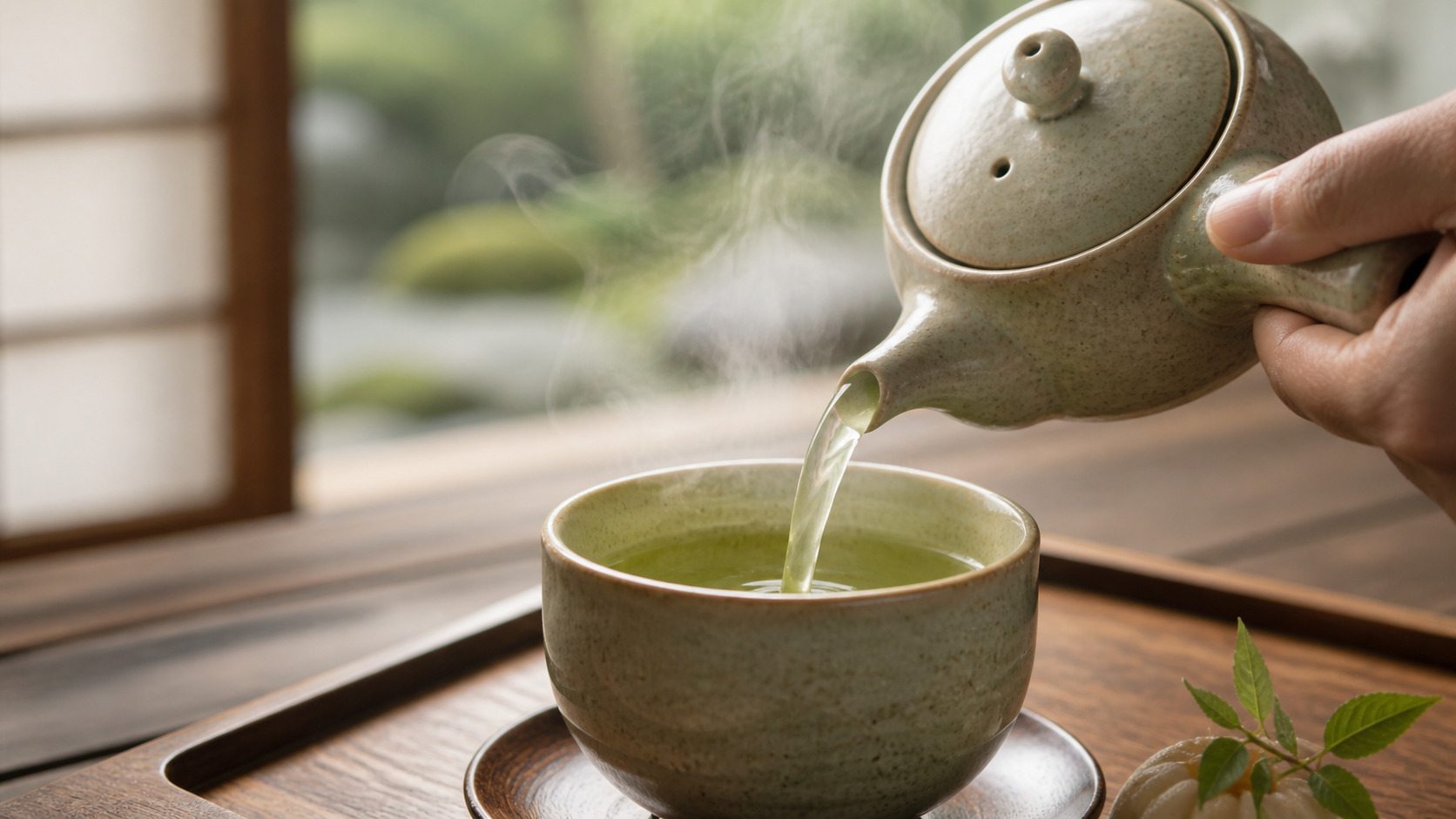
Place the tea leaves into the kyusu.
Let the hot water cool slightly.
Pour it into the cup.
Watch the steam rise.
That is all. And yet, within those simple gestures, there is a mysterious stillness.
Tea does not become delicious by being rushed. If the water is too hot, bitterness rises. If it is poured too soon, the fragrance remains shallow. Tea leaves have their own time of awakening, and water has its own moment of settling.
In other words, tea teaches us this:
Everything has its time to ripen.
In the modern world, where efficiency is prized, waiting is often treated as waste. But in the Japanese sense of beauty, ma, or interval, is not emptiness. It is the spaciousness through which things deepen.
In time that may appear to be doing nothing, the heart gathers itself, the senses grow clear, and feelings that could not yet become words begin to take on a quiet outline.
The few minutes spent waiting for tea are a small garden where the footsteps of thought gradually fade into the distance.
“Wa” Means Not Forcing Yourself Into Submission
When speaking of the Japanese spirit, the word wa is often used.
Wa does not simply mean avoiding conflict. Nor does it mean erasing yourself in order to conform to those around you. True wa is a state in which what has become disordered returns to its natural place, allowing each thing to resonate with the others.
When we are caught in impatience, we fall out of harmony with ourselves.
Even though we are tired, we tell ourselves to work harder.
Even though we are afraid, we pretend to be fine.
Even though we want to rest, we feel that stopping would mean defeat.
And so, within the heart, a quiet collision continues.
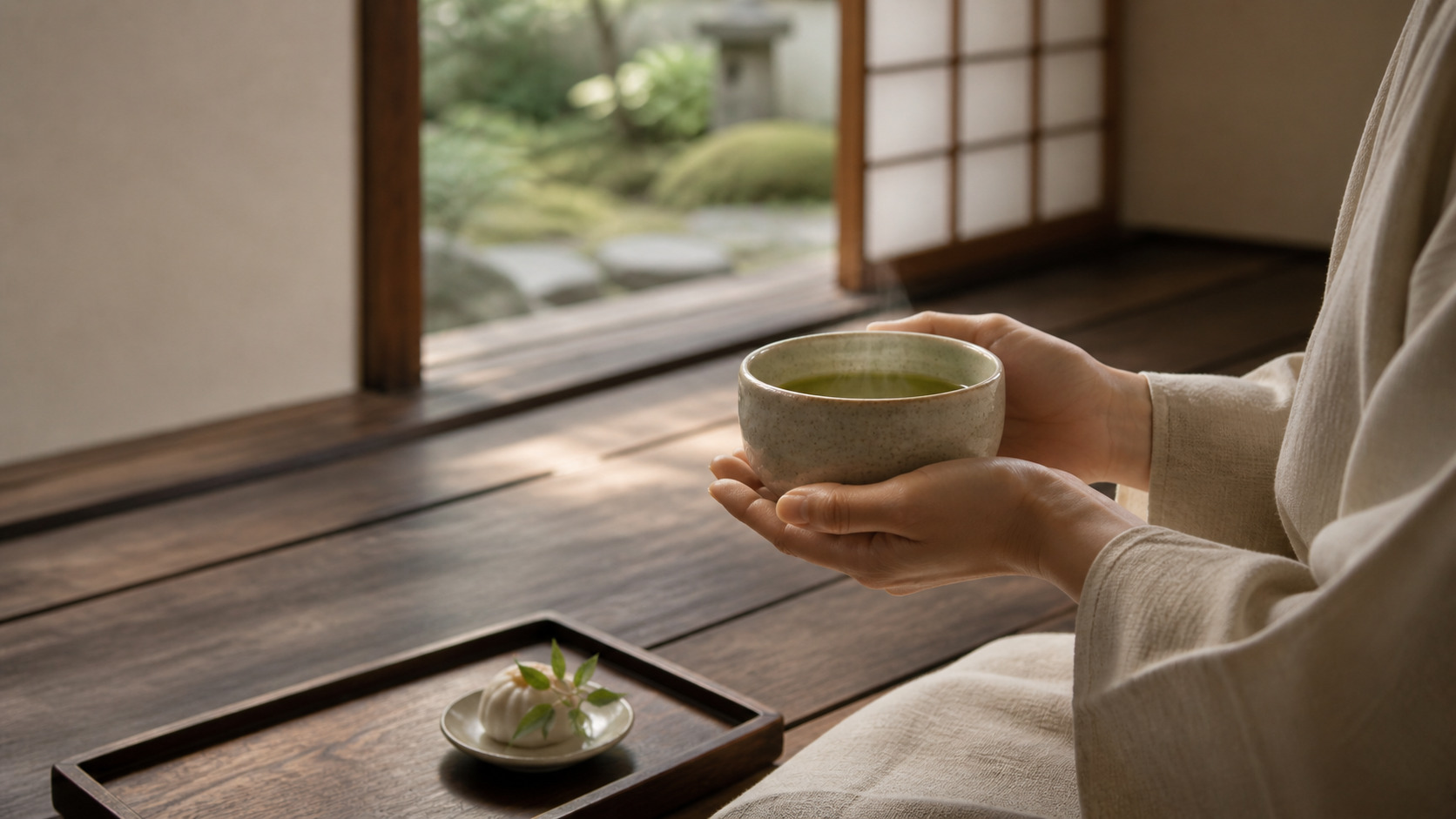
Brewing tea is a small ritual that loosens this inner discord. Boiling the water, choosing the vessel, holding the tea bowl with both hands. These gestures become a time in which we tell ourselves:
“You may treat yourself a little more gently.”
There is no need to blame the version of yourself that was impatient. Impatience is not weakness. It is also proof that you cared about something. But if, in trying to protect what matters, you end up breaking yourself, then the order of things has been overturned.
Perhaps the heart of wa is this: allowing the voice within you that wants to hurry, and the voice within you that wants to rest, to sit at the same table.
What Wabi-Sabi Teaches: The Beauty of the Imperfect Now
One reason we become impatient is the belief that we must already be complete.
I must be more admirable.
I must produce more results.
I must be faster, more correct, stronger.
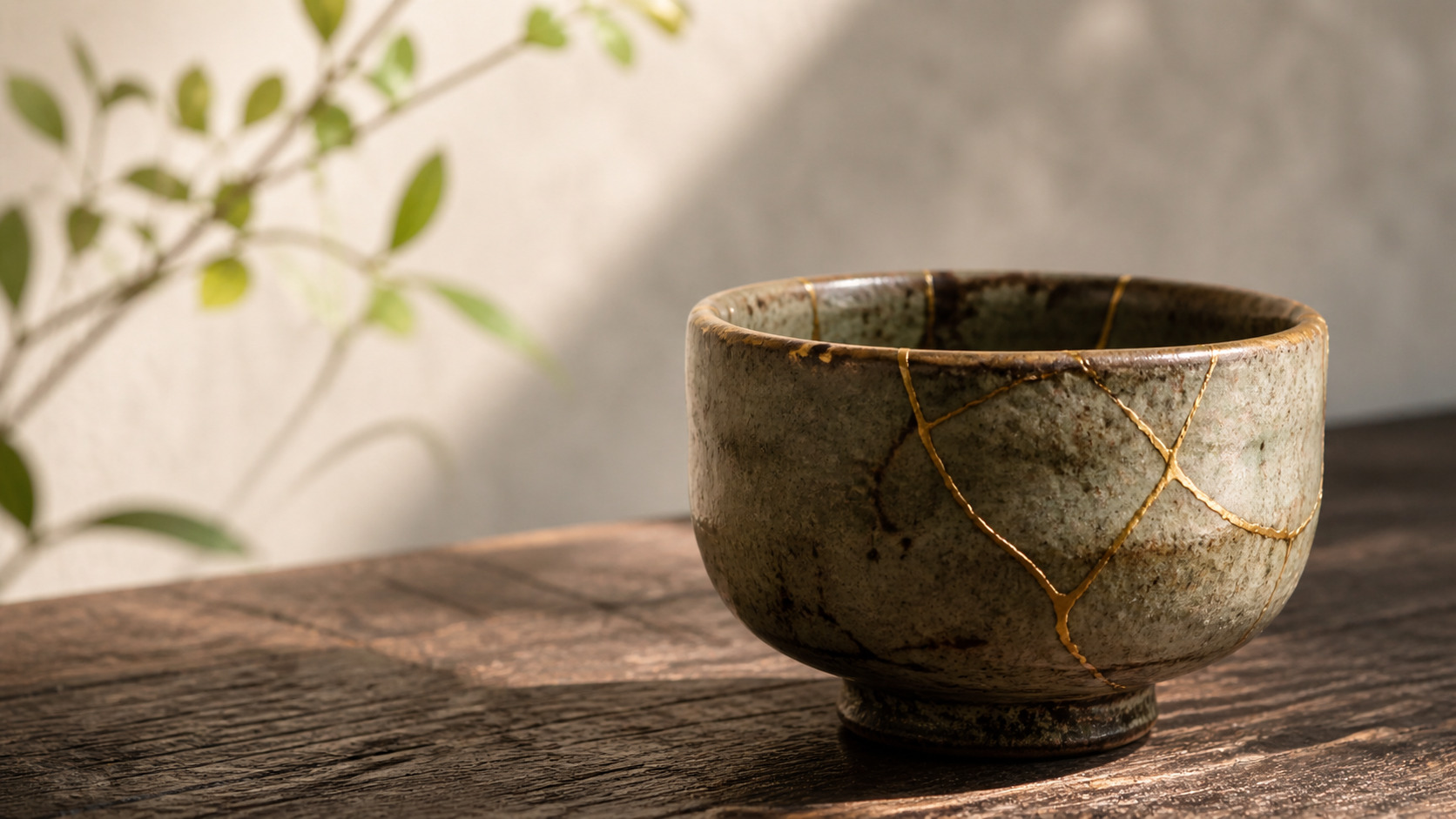
Yet the Japanese sensibility of wabi-sabi does not see beauty only in completion or perfection. A chipped vessel, faded wood grain, flowers at the moment of falling, the light of dusk. In such things, there is a depth that cannot dwell in what is overly polished.
To be imperfect.
To be changing.
To remain, even while bearing wounds.
At the heart of wabi-sabi is a gaze that does not reject these things, but receives them as richness.
The self that was impatient is not a failed version of life. The immature self, the frightened self, the self that rushed toward answers. All of them are like tea leaves that have led to who you are now.
Just as tea leaves slowly open in hot water, people are not completed in a single instant.
Impatience, hesitation, detours, all of them eventually deepen the flavor of the self. When we are able to think this way, the taut string within the heart suddenly loosens.
Ichigo Ichie: A Return to the Present
In the way of tea, there is a phrase: ichigo ichie.
It means to cherish this encounter as something that happens only once in a lifetime. Even if you meet the same person many times, this particular time, this air, this state of heart will never return in exactly the same form.
And this does not apply only to encounters with others.
The encounter with who you are today is also ichigo ichie.
The self who feels impatient today.
The self who is a little tired today.
The self who has finally managed to stop today.
The self who feels just a little relieved by the warmth of tea today.
Every one of them exists only once.
We tend to think we can feel at ease only after we become our ideal selves. We try to rest only after results appear. We try to forgive ourselves only after someone recognizes us.
But tea speaks more quietly:
“Even who you are now is worth savoring.”
It is all right to still be on the way.
It is all right to still be wavering.
It is all right if the answer has not yet appeared.
A single sip from the tea bowl does not affirm a completed future. It affirms the unfinished present.
A Cup of Tea Brings You Back to Yourself
Drinking tea is not a dramatic solution.
Problems do not suddenly disappear. Tomorrow’s anxieties do not vanish completely. And yet, when we feel the warmth of the vessel in our hands, we return, even just a little, to our own bodies.
We sense the aroma.
We feel the warmth pass through the throat.
The breath deepens.
The shoulders loosen.
That small change is a path home for the heart.
What the Japanese spirit has cherished is not some grandiose enlightenment. Rather, it is the refusal to overlook the subtle beauty within everyday life: the presence of the seasons, the feel of a vessel in the hands, the richness of silence, the gesture of brewing tea while thinking of someone.
Such things slowly cultivate the rough soil of a troubled heart.
Impatience is a habit of the heart pulled too far into the future.
Tea is the quietest anchor for returning that heart to the now.
If you ever again feel as though something is chasing you, try brewing a cup of tea.
Do not hurry. Pour the water. Wait for the fragrance.
Watch the tea leaves open.
Wrap the vessel in both hands.
Then take just one careful sip.
In that moment, the world becomes a little quieter.
And from somewhere deep within your chest, you may hear a voice say:
“Why was I in such a hurry?”
If that question arises, then you are already all right.
You have already begun returning to your own place.
Widget Banner
